Why Full Wedding Design Is the Difference Between a Pretty Wedding and a Cohesive One
There is no shortage of wedding inspiration.
Pinterest boards, saved Instagram posts, styled shoots, real wedding galleries, colour palettes, tablescapes, floral installations, stationery suites, candlelit rooms, marquee ceilings, castle staircases and outdoor ceremony ideas are everywhere.
And while inspiration is a wonderful place to begin, it is not the same as design.
That is where many couples start to feel stuck. They know what they like. They have saved hundreds of beautiful images. They can recognise the colours, flowers and details they are drawn to. But turning all of that into one cohesive wedding design is a very different skill.
A beautiful wedding is not created by choosing lots of lovely things and hoping they work together. It is created through considered design. The flowers, styling, stationery, candles, linens, table details, ceremony space and venue all need to feel part of the same story.
This is where my work has naturally evolved.
While florals are still at the heart of what I do, I now work increasingly as a wedding and event designer, creating the full visual direction for a day. That means looking beyond the flowers alone and thinking about how every design element works together – from the first glimpse of the stationery to the ceremony backdrop, the tablescape, the room styling and the final details guests experience on the day.
For couples investing in a luxury wedding in Scotland or beyond, this level of design matters. It is the difference between a wedding that looks pretty in parts and a wedding that feels completely considered from beginning to end.
What does full wedding design actually mean?
Full wedding design is about creating one clear visual direction for your wedding day.
It is not simply choosing flowers, then picking candles, then finding linens, then ordering stationery, then hoping everything works together when it arrives. It is about understanding the full picture before those decisions are made.
As a wedding event designer, I think about the venue, the atmosphere, the season, the colour story, the guest experience, the photography, the flow of the day and the key moments where design will have the greatest impact.
That includes the florals, but it also includes the styling details that sit around them. Stationery suites, table plans, menus, place cards, candles, linens, table styling, ceremony styling, installations and focal points all contribute to how the wedding feels.
When these elements are designed together, the result is much stronger. The colours feel intentional. The tables feel balanced. The flowers belong in the room. The stationery supports the overall tone. The venue is enhanced rather than hidden. Nothing feels random or added at the last minute.
That is the difference between decorating a wedding and designing one.
Why florals alone are not always enough
Flowers have enormous impact, but they do not exist in isolation.
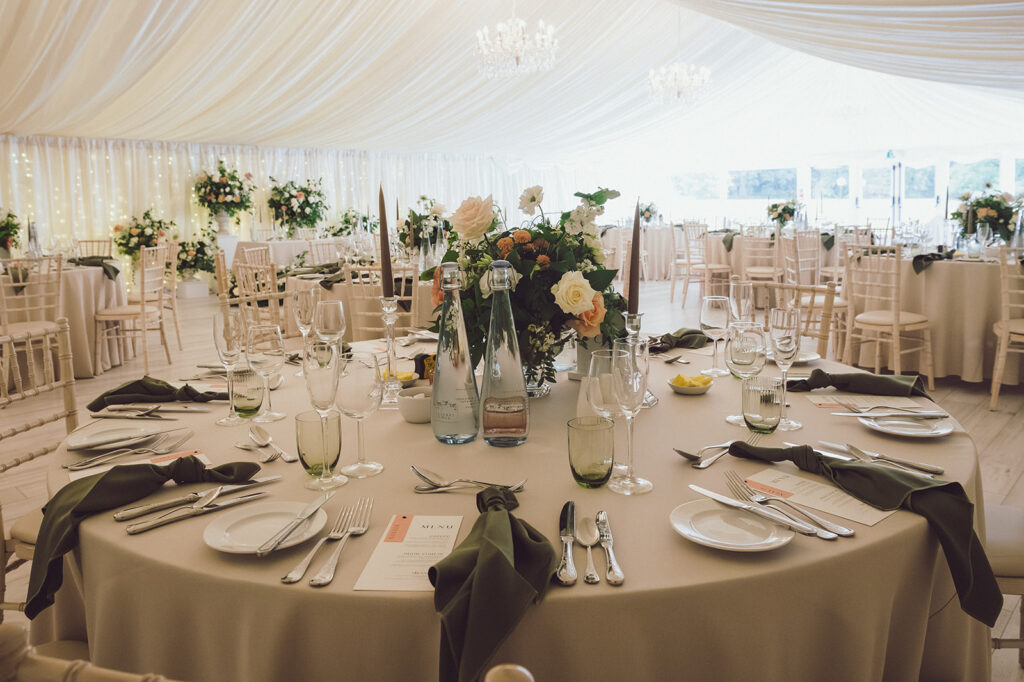
A beautiful tablescape is not just flowers. It is the relationship between the flowers, candles, linens, stationery, tableware, glassware, spacing, scale and the room itself. A ceremony space is not just an arch or a pair of urns. It is the way the flowers frame the couple, work with the light, sit within the landscape or architecture, and create a sense of occasion.
This is why I often encourage couples to think less about individual items and more about the overall design.
Instead of asking, “What flowers do we need?”, it is much more useful to ask, “What do we want this space to feel like?”
Do you want your ceremony to feel romantic and full of softness? Do you want your reception to feel warm, candlelit and intimate? Do you want your marquee to feel abundant and connected to the landscape? Do you want your castle wedding to feel elegant, dramatic and full of atmosphere?
Once we understand the feeling, we can design the right elements to create it.
Sometimes that means flowers. Sometimes it means candlelight, fabric, stationery, table styling or a carefully placed focal point. Most often, it is the combination of all of these things working together.
The value of a clear design proposal
One of the most important parts of my process is the design proposal.
This is where scattered inspiration becomes a clear, considered direction. Rather than leaving you with a collection of ideas, a design proposal shows how the wedding will actually come together visually.
It can include the overall concept, colour story, floral direction, stationery design, ceremony styling, tablescape details, candles, linens, installations and key areas of impact. It allows you to see how the different parts of the day connect and gives us a strong creative foundation to work from.
For couples planning a luxury wedding, this is incredibly valuable. It gives clarity, confidence and direction. It also helps ensure your investment is being used in the right places, rather than being spread thinly across lots of details that may not create much impact.
A good design proposal is not just about showing pretty pictures. It is about explaining the thinking behind the design. Why certain colours work in your venue. Why a particular installation will create more impact than flowers in every corner. Why your stationery should connect with your table styling. Why the ceremony design should flow into the reception.
It is the difference between guessing and having a plan – and you know how I love a plan!
Cohesive does not mean predictable
One thing I always want couples to understand is that a cohesive wedding does not have to feel overly matched or safe.
Cohesion is not about making everything the same colour. It is not about matching every candle to every flower to every piece of stationery. In fact, weddings that feel too matched can sometimes lose their warmth and personality.
A strong design has depth. It has contrast, texture, movement, softness and a few unexpected details. It feels layered rather than flat.
The key is that every decision still belongs to the same visual story.
A mocha, cream and peach palette can feel soft, modern and quietly luxurious. A green and white design can feel timeless, abundant and elegant. A brighter palette with sunflowers or summer colour can feel joyful, warm and full of life. The same colours can feel completely different depending on the venue, styling and materials around them.
That is why full design matters. It is not just about choosing a palette. It is about knowing how to use that palette across flowers, stationery, candles, linens and the venue itself so the whole wedding feels intentional.
Stationery is part of the design, not an afterthought
Stationery is often treated as a separate task in wedding planning, but it has a huge role to play in the overall design.
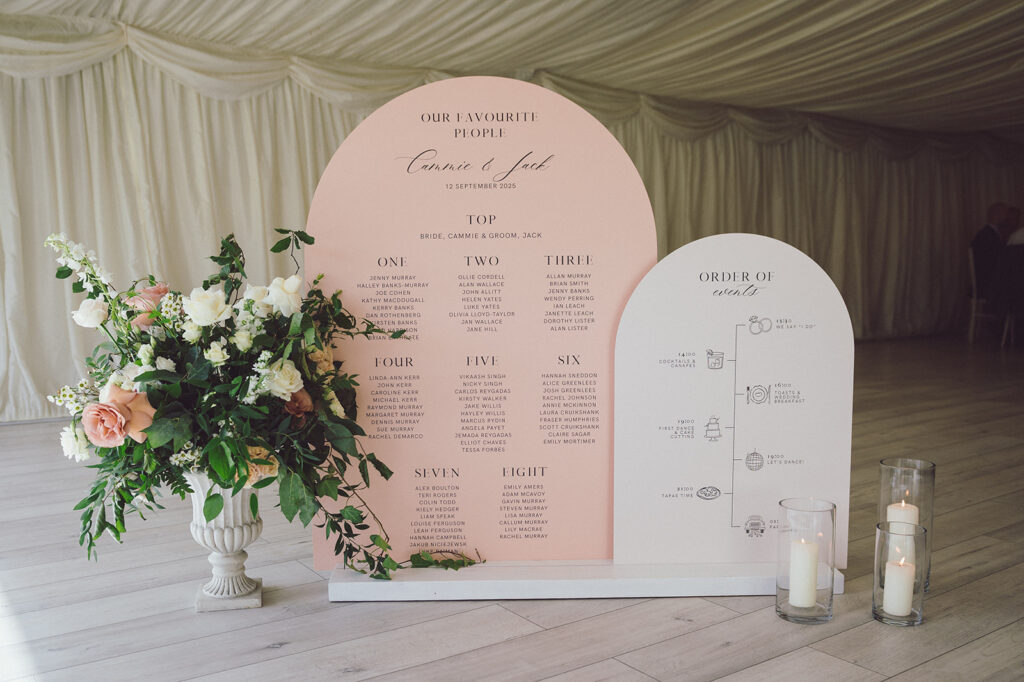
Your stationery suite is often the first glimpse guests have of your wedding. It sets the tone before they arrive. Then, on the day itself, your table plan, menus, place cards, signage and printed details become part of the visual experience.
When stationery is designed alongside the florals and styling, the whole wedding feels more connected.
The paper tone can complement the linens. The typography can support the level of formality. The colours can echo the flowers. The menus and place cards can sit beautifully within the tablescape rather than feeling like something added at the end.
I have loved creating stationery suites as part of full wedding design because they allow the visual story to begin much earlier. It means the details do not just match. They make sense.
For couples who want a luxury wedding that feels considered from start to finish, stationery should not be an afterthought. It should be part of the design conversation from the beginning.
Designing for your venue
Every venue has its own character, and the best wedding designs respond to that.
A Scottish castle, a country house, a barn, a marquee, an outdoor ceremony space and a candlelit dining room all need different design decisions. What works beautifully in one venue may feel completely wrong in another.
That is why I always design with the venue in mind.
I look at the scale of the rooms, the natural light, the architecture, the existing colours, the flow of the day and the areas where guests will naturally gather. I think about what needs softening, what should be highlighted, and where design will create the most impact.
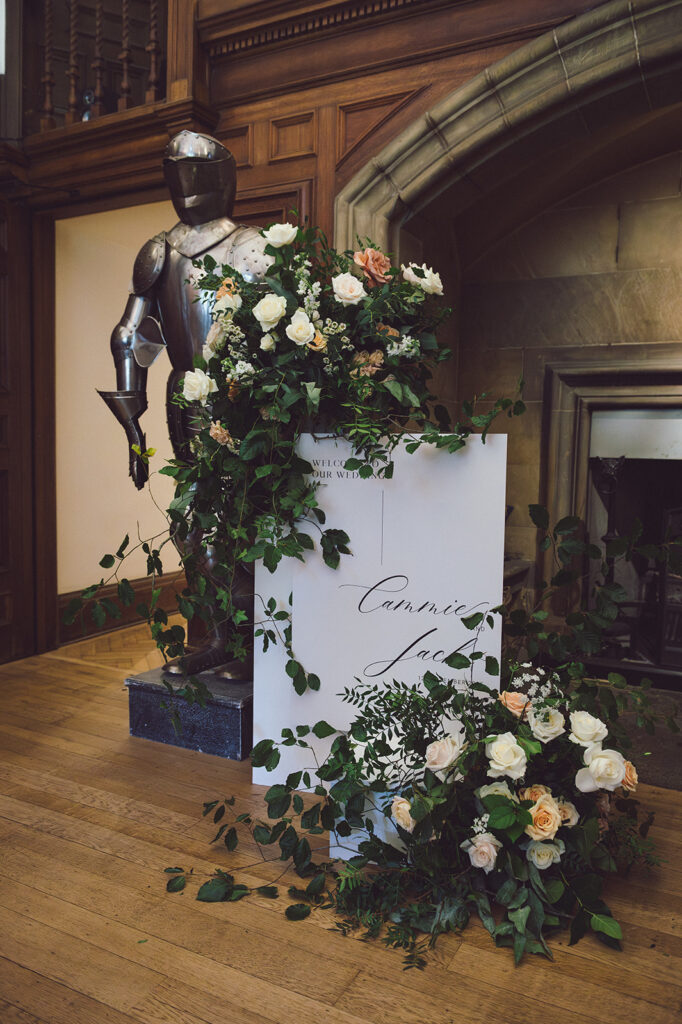
Sometimes the strongest design moment is already there. A fireplace, staircase, beam, doorway, long table or beautiful view can become the anchor for the whole design. The role of flowers and styling is to enhance those features, not fight against them.
This is especially important for weddings in Scotland, where venues often have so much character already. The design should feel like it belongs in the space, not like it has been copied from somewhere else and placed inside it.
Where your investment has the most impact
For couples investing in a luxury wedding, it is more important than ever to think carefully about where your budget will create the most impact. The Bridebook UK Wedding Report highlights how couples are continuing to plan more strategically, prioritising the elements that matter most to them rather than simply spending everywhere. For couples with a floral and styling budget of £5,000 and above, the aim should not simply be to have more flowers. The aim should be to create stronger design, better impact and a more considered experience.
That might mean investing in a statement ceremony design that can be repurposed later in the day. It might mean a beautifully layered tablescape where flowers, candles, linens and stationery all work together. It might mean a mantlepiece installation, a staircase design, a marquee ceiling feature or a focal point that transforms the room.
The best luxury weddings are not always the ones with flowers in every possible place. They are the ones where the design decisions are made with confidence.
Impact comes from knowing where to focus.
It is about understanding which moments guests will notice, which details will appear in photographs, which spaces need atmosphere, and where your investment will work hardest.
That is part of my role as an event designer: helping you make those decisions with clarity, rather than leaving you to guess.
For couples planning in Scotland and beyond
Many of the couples I work with are planning weddings in Scotland, but not all of them live here. Some are based elsewhere in the UK or overseas and are planning a Scottish wedding from a distance.
For those couples, a clear design process is even more important.
When you cannot visit your venue regularly or check every detail in person, you need to trust that someone understands the full visual direction of your day. You need someone who can think about the flowers, styling, stationery, tablescape and venue together, and give you confidence that it will all feel cohesive when you arrive.
A strong design proposal, clear communication and a thoughtful process make that possible.
It means you are not trying to manage lots of separate visual decisions from afar. Instead, you have one clear creative direction and someone guiding the details so everything feels beautifully connected.
Turning inspiration into something that feels like you
Your wedding should not feel like someone else’s Pinterest board.
It should feel like you.
That does not mean you need to have an entirely original idea that no one has ever seen before. It means the design should be created around your venue, your season, your priorities, your personalities and the atmosphere you want to create.
You might come to me with a clear vision, or you might come with a folder full of saved images and no idea where to begin. Both are completely normal.
My job is to find the patterns, understand what you are really drawn to, and turn that into a design that feels cohesive, elevated and personal. Not copied. Not random. Not overdone for the sake of it.
Just beautifully considered.
Working with a wedding event designer
If you are looking for someone to simply provide a bouquet and a few table flowers, I may not be the right fit.
But if you are planning a wedding in Scotland or beyond and want the full visual experience to feel thoughtful, cohesive and full of impact, that is where I can help.
My work now sits at the intersection of floristry, styling and event design. Flowers are still central to everything I do, but they are part of a much bigger picture.
I can help with the overall creative direction of your wedding, including florals, styling, stationery suites, candles, linens, tablescapes, ceremony spaces, installations and the key design moments that bring the whole day together.
This is for couples who care about atmosphere as much as aesthetics. Couples who want their wedding to feel beautifully designed, not just decorated. Couples who are ready to invest in a full design experience and want to feel guided, understood and excited throughout the process.
If that sounds like you, I would love to hear more about your plans.
Let’s turn your inspiration into a wedding that feels cohesive, considered and completely yours, get in touch now.